



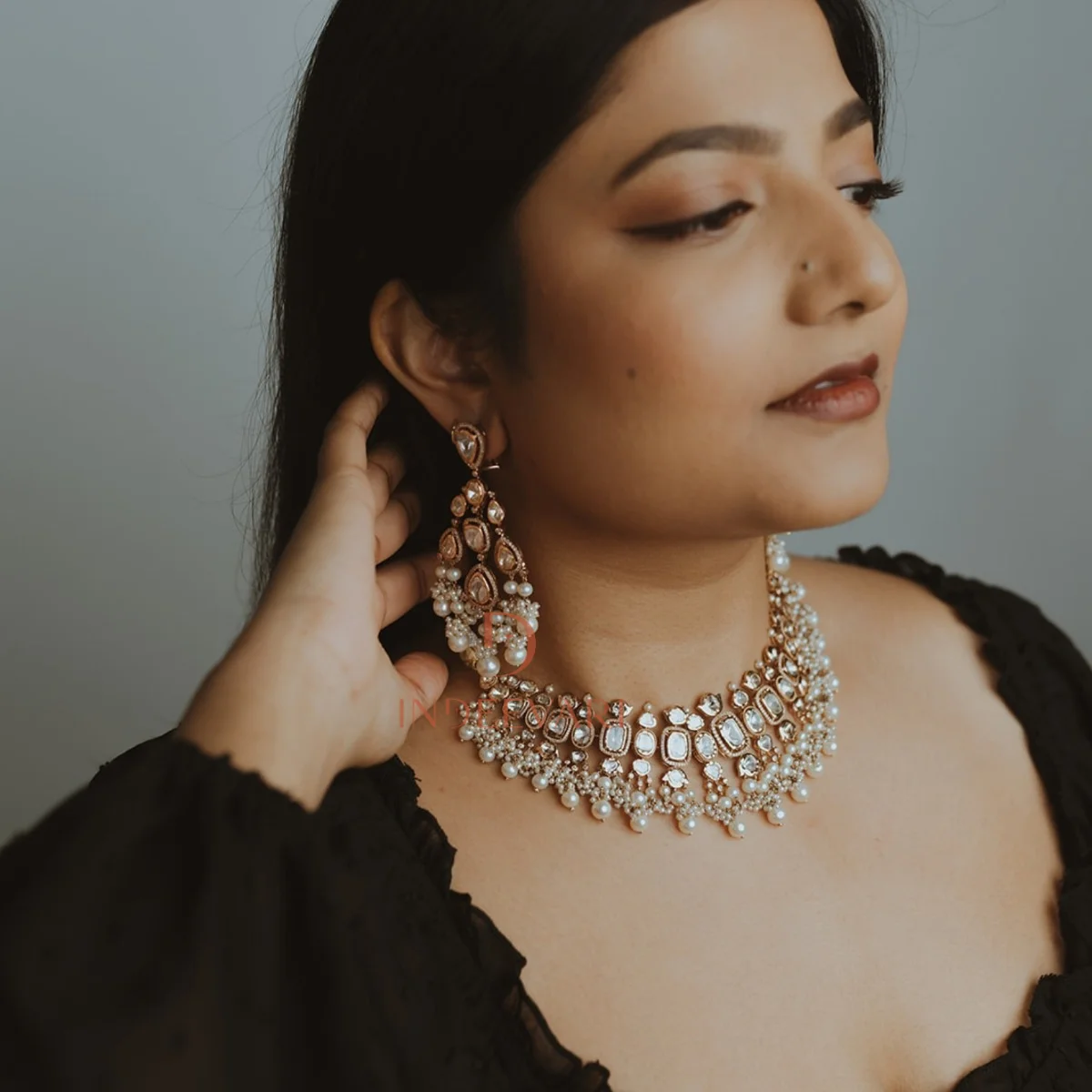
Three ways to wear a diamond
Your mom wore polki at her wedding. Your cousin wore a sparkly diamond set at her reception. And your best friend just sent you a photo of a Victorian necklace with "OBSESSED " underneath.
They all have diamonds. So what's the difference?
It comes down to how the diamond is cut, how it's set, and the feeling it gives. Let's break it down.
Polki: the diamond in its natural form
What it is: polki means an uncut diamond. It keeps its natural shape instead of being cut into dozens of facets (Tyaani). And yes, it's a real diamond.
How it looks: a soft, glassy glow, not a sharp sparkle. Each stone is a little different, so no two polki pieces are exactly alike.
How it's set: polki is usually set with a thin foil behind it to reflect light back through the stone, using traditional Indian setting methods like kundan and jadau (Skyjems).
The history (this is the good part): many historic polki diamonds came from the Golconda mines of South India (Skyjems). So when a Telugu bride wears polki, she's wearing a tradition with deep roots in her own region.
Best for: brides, heirloom sets, anyone who loves an old-world, royal look.
Diamond: the modern sparkle
What it is: cut and polished diamonds with many facets, the kind you'd see in an engagement ring.
How it looks: bright, fiery sparkle that catches the light from across the room. Cut diamonds reflect more light than polki (Tyaani).
How it's set: usually in 18K gold, with open settings so light passes through the stone.
Best for: receptions, cocktail parties, everyday diamond studs, and modern mangalsutras.
Good to know: at Indeevari, our product pages list each diamond's shape, color and clarity grade, so you know exactly what you're buying.
Victorian: where India met the West
What it is: a style, not a stone. Victorian jewelry blends Indian design with European influence, usually with diamonds alongside rubies, emeralds and pearls, often in a darker, vintage-looking finish.
The history: in the late 1800s and early 1900s, Western taste began to shape Indian jewelry, especially in Hyderabad under the Nizams. Open settings let light shine through cut diamonds and emeralds, and European motifs found their way into traditional pieces (Meer, on the V&A's Bejewelled Treasures exhibition).
How it looks: dramatic and romantic. Lots of sparkle, framed by deep, rich tones.
Best for: reception looks, sangeet, and anyone who wants something bold that still feels Indian.
Quick comparison
| Polki | Diamond | Victorian | |
|---|---|---|---|
| Diamond type | Uncut | Cut and polished | Usually cut |
| Sparkle | Soft glow | Bright, fiery | Bright, with deep tones |
| Feels | Royal, heirloom | Modern, clean | Vintage, dramatic |
| Usually set in | 22K gold | 18K gold | Gold with darker finish |
| Best for | Muhurtham, bridal | Reception, everyday | Reception, sangeet |
Which one should you pick?
Pick polki if you want your wedding jewelry to feel like it's been in the family for 100 years.
Pick diamond if you want sparkle you can wear again and again, at weddings and on regular Tuesdays.
Pick Victorian if you love a little drama and want something that looks amazing in photos.
Or build a trousseau with all three: polki for the muhurtham, Victorian for the sangeet, and diamonds for the reception and every day after.
Find your style
Explore our Uncut Diamond / Flat Polki, Diamond and Victorian collections. Every piece is handcrafted by master artisans, and ships free and insured to the USA, with duties and customs covered. Want to mix styles in one custom piece? Book a consultation and let's design it.


